I recently attended a Pinot Noir Masterclass that focused on the sub-regionality across New Zealand's major Pinot Noir wine-growing regions. Cameron Douglas MS led the Masterclass and tasting and touched on the nuances of each region. What makes each these New Zealand specific sub-regions, and wines, so special? New Zealand Pinot Noir’s are some of my favorites (along with Oregon, Burgundy, and Russian River, Sonoma, CA). Cameron Douglas, MS lives and works in New Zealand. His roles? He served as an educator at Auckland University, a wine writer of The Shout Magazine, and serves as Rodd & Gunn’s Beverage Director & Group Sommelier. Cameron lives in West Auckland where the first major wine production in New Zealand occurred. This Kiwi will “stop at nothing to further his love of all things wine.”
If you would like to take this masterclass, click on the YouTube Video recording above.
Wine Wanderings is a reader-supported publication. To receive new posts and support my work, consider becoming a free or paid subscriber.
*There are 10 official wine regions in New Zealand – each have 3 subregions (except 1). They are found on both the North Island and the South Island.
*All of these regions grow Pinot Noir--some better than others as New Zealand is also famous for its Sauvignon Blanc wines. Notable Pinot Noir growing regions: Central Otago, Martinborough, Marlborough, North Canterbury, Nelson, and Hawkes Bay.
*There are 40,000 hectares (2.47 acres=1 ha) of wine-growing land in New Zealand, with 14.3% dedicated to Pinot Noir.
*New Zealand climate features long sunshine hours (as many as 1950 sunshine hours annually) and nights cooled by sea breezes to yield grapes and wines known for their purity, vibrancy, and intensity of both fruit and aromatics.
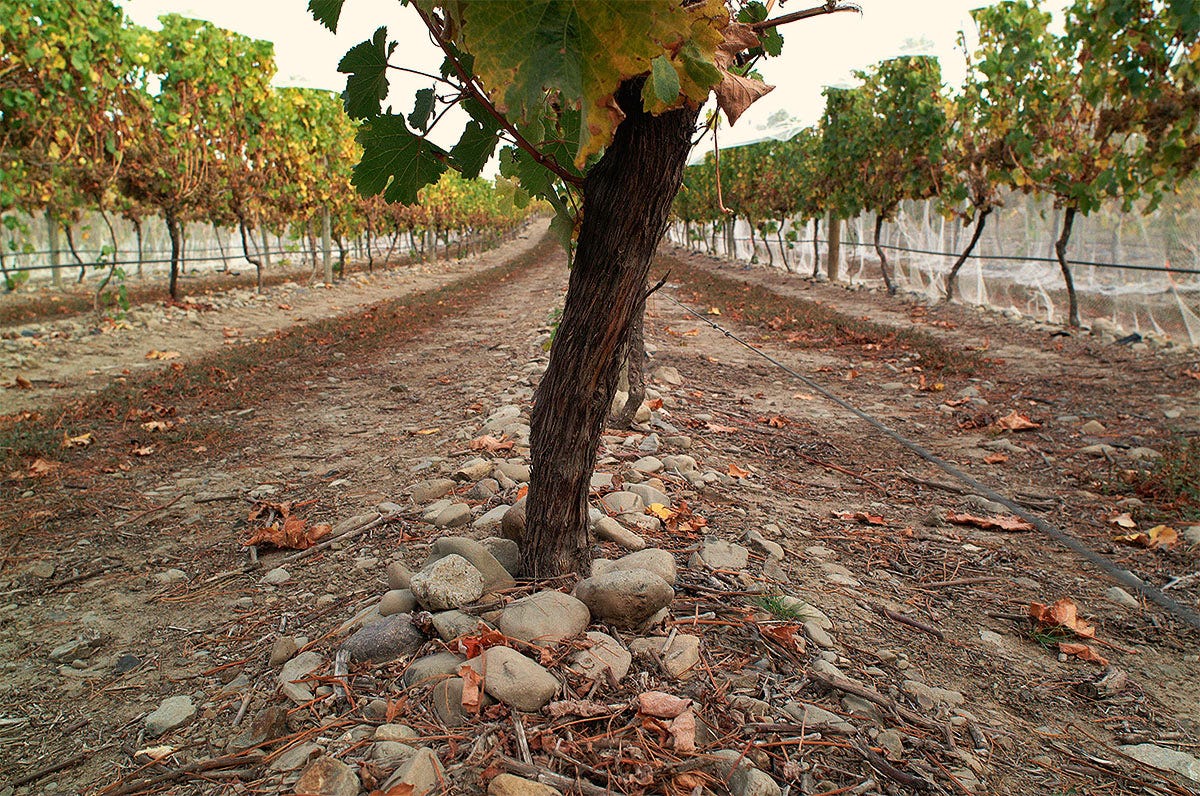
Pegasus Bay, North Canterbury Region, gravel soil
*In 2020 New Zealand produced 329 million liters (87 million US gallons) of wine. There was a surging demand for NZ wines during the Pandemic. The 2021 vintage produced less wine due to grape harvest yield was down 19% in volume. Distribution is a current worry as container space on ships is limited and expensive due to supply chain issues during the Pandemic.
*Many of the Pinot Noir wines are vinified and aged in French oak.
*There are 731 Wineries and 732 growers in New Zealand and 96% are “certified sustainable” with many also “certified organic” and “biodynamic.” Look for the logos for these certifications on the producers’ bottles and websites. This high level of certification says volumes about the New Zealand push to look after their land.
*The 2021 Pinot Noir vintage was of high quality, but total yield was lower than normal.
*The growing region soils in New Zealand are from the Cenozoic, Cretaceous, Paleozoic eras, (65 million to 350 million years old.) These soils show marine influences and range in type from gravel-laden with free-draining river stones to fine and silky alluvial clay and silica soils.
* In New Zealand climate change is evident as growers are seeing the effects of weather extremes and sudden frosts. To mitigate the effect of this climate change, growers use vineyard management decisions (canopy management, close-planting vines, rootstock selection, etc.) and grape clone choices to help adjust to climate change.
This wine was fermented in wooden French cuvées and aged in 50% new French oak in barriques for 18 months. The wine features ripe flavors and soft, silky tannins. The grapes came from certified organic vineyards. The flavors and aromas show a fruit core of strawberry, red and dark cherry, and dusty minerality from this drier climate. This is a very complex wine, and it shows less oak impact that expected.
This is an aromatic Pinot Noir (floral) supported by intense mineral and spice notes. This is one of New Zealand and Central Otago’s most renown brands.
This is a deep, dark-fruited, and aromatic Pinot Nor showing notes of graphite, Morello Cherry, sliced strawberry, and crushed-stone undertones. The finish is exceptionally long.